

Islam Zayed
Comprehensive Ophthalmologist in Egyptian Ministry of health and population
Egyptian Phaco-Refractive Surgeon hold MBBCh, Diploma in ophthalmology, Master degree in ophthalmology and UNIEF UPMC CorneoRefractive Fellowship
Egypt
Abstracts
Hydration assisted IOL implantation instead of viscoelastic material in cataract surgery
Ophthalmic viscosurgical devices (OVDs) have long been considered essential
during intraocular lens (IOL) implantation in cataract surgery for maintaining
anterior chamber stability, protecting corneal endothelium, and facilitating
capsular bag expansion. Despite these advantages, the use of viscoelastic
materials is associated with several limitations, including increased surgical cost,
prolonged operative time, incomplete removal leading to early postoperative
intraocular pressure (IOP) spikes, and potential inflammatory reactions. These
concerns have driven interest in alternative techniques that can achieve similar
surgical stability while minimizing viscoelastic-related complications.
Hydration-assisted IOL implantation is an evolving technique in which balanced
salt solution is used through continuous irrigation to maintain anterior chamber
depth and capsular bag expansion during IOL insertion, eliminating the need for
viscoelastic materials. By relying on controlled fluid dynamics, this method
provides adequate chamber stability, allows smooth unfolding of the IOL within
the capsular bag, and preserves capsular integrity. The technique is particularly
advantageous in uncomplicated cataract surgeries, high-volume surgical
settings, and resource-conscious environments.
Clinical observations suggest that hydration-assisted IOL implantation may
reduce postoperative IOP elevation, decrease operative time, and simplify surgical
workflow by eliminating the need for viscoelastic injection and aspiration.
Additionally, reduced manipulation within the anterior chamber may contribute to
faster visual recovery and lower postoperative inflammation. When performed by
experienced surgeons with appropriate case selection, hydration-assisted
implantation demonstrates comparable safety and efficacy to conventional
viscoelastic-based techniques.
This presentation reviews the surgical steps, fluidics principles, patient selection
criteria, advantages, limitations, and early clinical outcomes of hydrationassisted
IOL implantation, emphasizing its potential role as a safe, efficient, and
cost-effective alternative in modern cataract surgery.
Past Speakers
Speakers of The Club

Cioracsim Lorena
TenMed Medical Clinic,

Barnaby Carr
(University and country): Maidstone Tunbridge Wells Trust

Leandre ESCOLANO
Université Paris Cité

Vitaly Man
Tel Aviv Sourasky Medical Center- Ihilov Hospital

Tanisha Das
Siksha ‘O’ Anusandhan University

B. Ouazzani Chahdi
University Mohammed V Rabat
.png)
Davide Volante
Davide Volante Beratung & Training (MedTech/Healthcare), Dresden

Irene Sophia Joseph
Genesis Healthcare Center

Jai Wiam
Orthoptiste & Fondatrice d’Orthocare Maroc
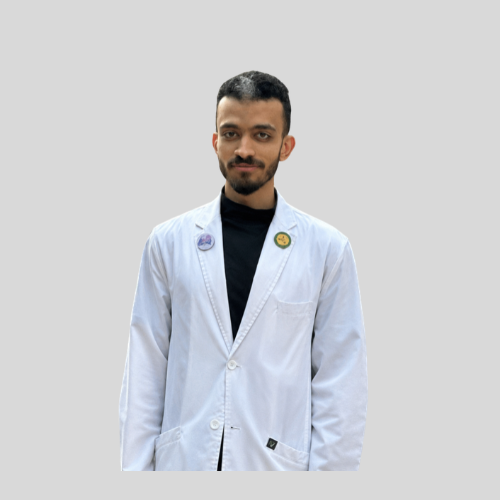
Awwab Adel Shahhatalsayed
King Saud bin Abdulaziz University for Health Sciences (KSAU-HS)

Marwa Ahmad Lutfi
Dubai Hospital – Dubai Health

Hasen Hameed Aljadani
King Saud bin Abdulaziz University for Health Sciences (KSAU-HS),

Mohamad Jazli Ahmad Sobri
Hospital Sultan Abdul Aziz Shah

Walid Sulaiman Al-Khalil
College of Medicine, University of Hail